ICLR 2026 Workshop on Scaling Post-training for LLMs
SPOT @ ICLR'26

Post-training—spanning Supervised Fine-Tuning (SFT), Reinforcement Learning (RL), and beyond is no longer a final adaptation step. It has become a compute-intensive, first-class phase that increasingly determines the capabilities, safety, and efficiency of large language models. Yet, despite its growing importance, post-training at scale remains poorly understood.
Recent frontier models allocate a substantial and rapidly growing fraction of total compute to post-training, while academic efforts are only beginning to develop principled, scalable methodologies. Unlike pre-training, where scaling laws and design trade-offs are well studied, post-training lacks a comparable scientific framework.
The Workshop on Scaling Post-Training for LLMs (SPOT) aims to address this gap by focusing on the foundational principles that make post-training scale, across algorithms, data, architectures, systems, and objectives. Rather than targeting specific applications, SPOT centers on understanding the design choices, bottlenecks, and trade-offs that govern efficiency, stability, and asymptotic performance in large-scale post-training.
We are excited to invite submissions to the ICLR 2026 Workshop on Scaling Post-Training for LLMs (SPOT). SPOT aims to bring together academic and industrial researchers to share experiences, identify open challenges, and move toward a principled science of post-training at scale.
Topics of interest include, but are not limited to:
Accepted papers will be presented as talks or posters during the workshop. The workshop will select the best paper(s) to recognize outstanding contributions in the field.
This workshop does not produce formal proceedings. Accepted submissions will appear on OpenReview, but authors remain free to submit and publish their work elsewhere in the future.
Submit your paper through the OpenReview Submission Portal .
For inquiries, please contact us at spoticlr@gmail.com.
This year, ICLR is discontinuing the separate “Tiny Papers” track and instead requires each workshop to accept short (4 pages in ICLR format) paper submissions, with an eye towards inclusion. Authors of these papers will be earmarked for potential funding from ICLR. A separate application for Financial Assistance is required to evaluate eligibility. The application for Financial Assistance will open at the beginning of February and close on March 2, 2025. For more details, visit Call For Tiny Papers.
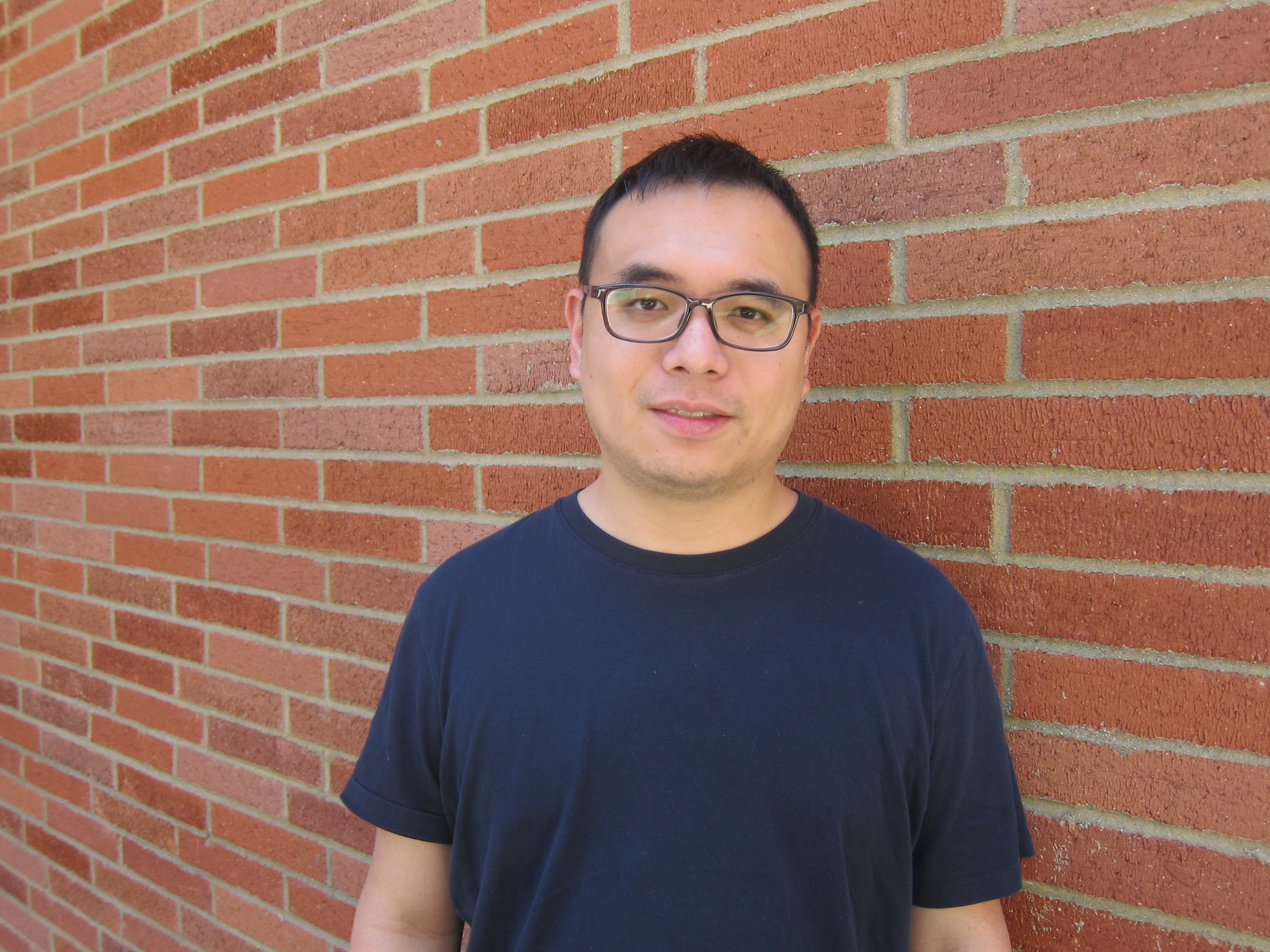
We are looking forward to hosting an exciting set of invited speakers from diverse research backgrounds!








| Time | Arrangement |
|---|---|
| 08:50 - 09:00 | Introduction & Opening Remarks |
| 09:00 - 09:35 | Invited Talk #1 |
| 09:35 - 10:10 | Invited Talk #2 |
| 10:10 - 10:40 | Oral Presentations (3 presentations, 10 mins each) |
| 10:40 - 11:00 | Coffee Break |
| 11:00 - 11:35 | Invited Talk #3 |
| 11:35 - 12:30 | Poster Session 1 |
| 12:30 - 13:30 | Lunch (provided by ICLR conference) |
| 13:30 - 14:05 | Invited Talk #4 |
| 14:05 - 14:40 | Invited Talk #5 |
| 14:40 - 15:10 | Oral Presentations (3 presentations, 10 mins each) |
| 15:10 - 15:45 | Invited Talk #5 |
| 15:45 - 16:45 | Panel Discussion: Prospects & Pitfalls of Scaling Post-Training of LLMs |
| 16:45 - 17:45 | Poster Session 2 |
| 17:45 - 18:00 | Paper Awards and Closing Remarks |











Thank you to our generous sponsors for supporting SPOT @ ICLR 2026.

An AI-powered search and productivity tool designed primarily for students, researchers, and professionals to streamline academic and web-based research.

A cloud-native observability and security platform that provides real-time monitoring of infrastructure, applications, logs, and user experience.